
What It Takes to Care for a Rescued Bald Eagle at Moccasin Lake
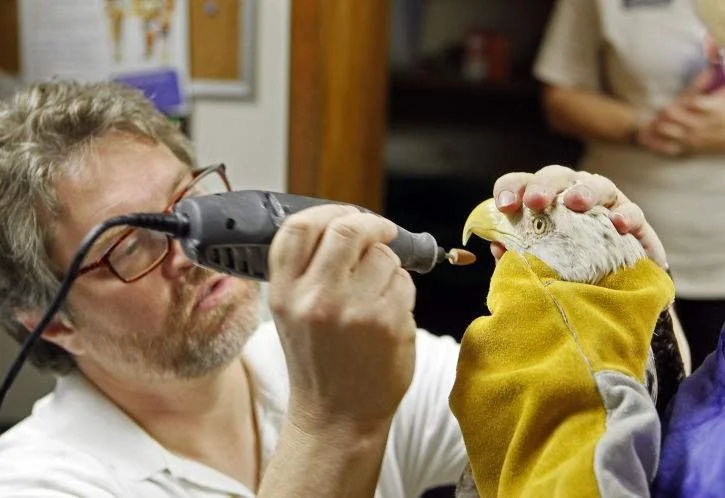
In the wild, an eagle keeps its beak in shape the way any tool gets maintained through use — scraping it against branches, tearing into prey, wearing it down naturally against rough bark and bone. In captivity, none of that happens the same way, which means somebody has to do it by hand.
That somebody, periodically, is a volunteer veterinarian from the Animal Hospital of Northwood, who visits Moccasin Lake Nature Park to file down overgrown beaks and check talon health on the sanctuary's permanent raptor residents. It's not a dramatic procedure, but it's a necessary one: left unchecked, an overgrown beak can crack, and the tip can break off entirely, leaving the bird unable to eat properly.
Barb Walker of Clearwater Audubon, who has overseen the sanctuary's eagles for years, explains the issue plainly — captive birds simply don't have access to the varied textures and tree branches they'd use to shape their own beaks in the wild, and their diet is slightly different from what they'd hunt naturally. So the maintenance work falls to volunteers and visiting vets instead.
It's a good example of what "sanctuary" actually means day to day. It's not just providing an enclosure and food. It's replicating, by hand, all the small physical processes an animal would otherwise handle on its own.
This kind of care relies on donations and volunteer hours. See how you can help →
Original source: tampabay.com, Aug 2019
